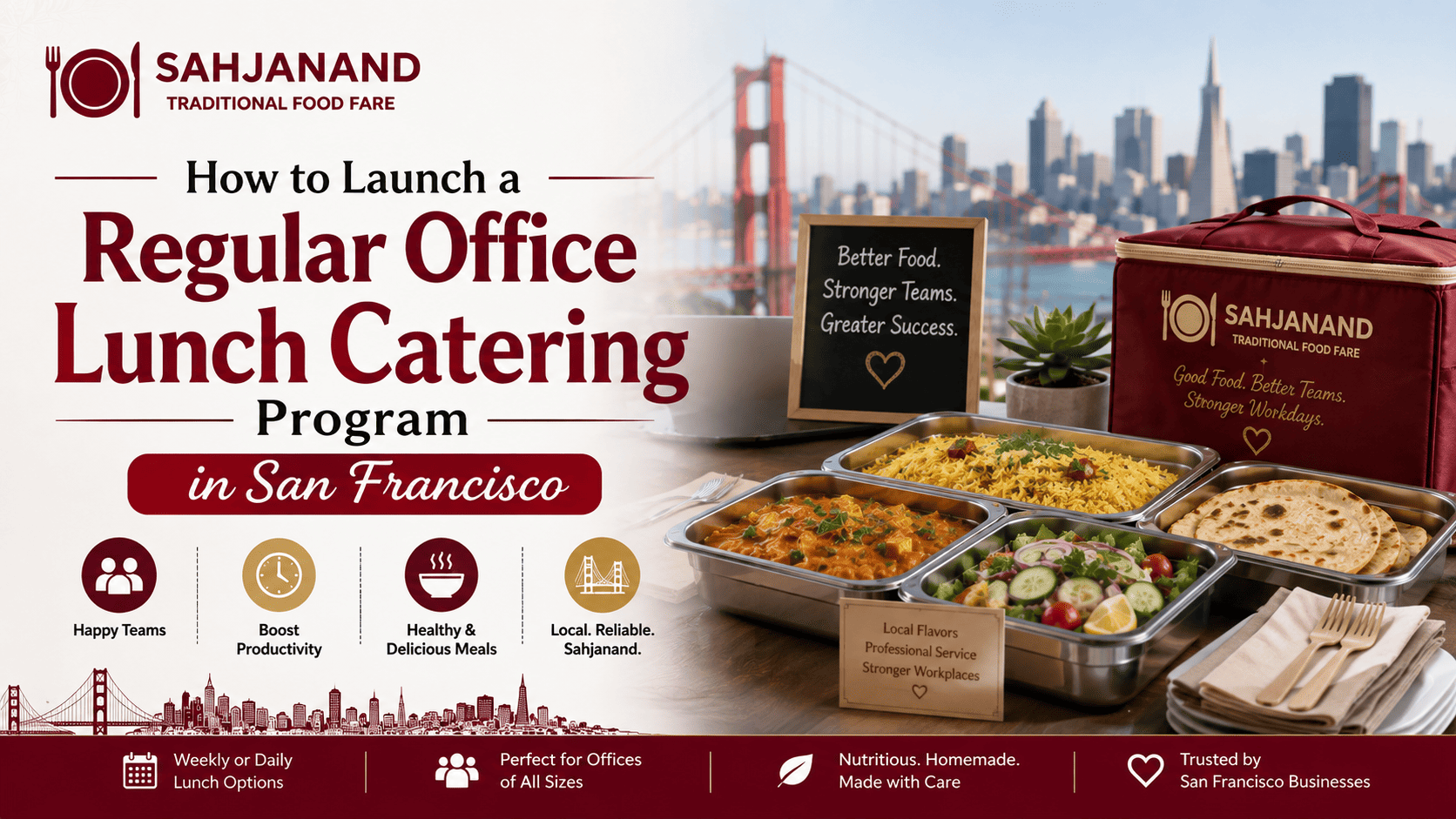
Workplaces are constantly evolving, making it increasingly challenging to keep employees motivated, connected, and productive. Many companies in San Francisco now operate with hybrid teams, flexible schedules, and employees who expect more than complimentary coffee in the break room. One simple change that can provide lasting value is a well-planned office lunch catering program.
Recurring lunch programs offer more than just meals. They create opportunities for collaboration, support employee wellbeing, simplify daily operations, and strengthen workplace culture. With Sahjanand Catering, companies can provide reliable, high-quality lunches that accommodate different schedules and dietary requirements without requiring employees to leave the office during busy workdays.
This guide will help you plan your office lunch catering budget for 2026 and choose the right catering approach for your San Francisco workplace.
Why Recurring Office Lunch Programs Are Growing in 2026
Modern workplaces have changed significantly in recent years. Companies are looking for practical ways to improve employee satisfaction while maintaining operational efficiency. Regular office catering programs have become a simple way to support both goals.
For many organizations, catered lunches are no longer occasional perks but have become part of their everyday workplace strategy. Managers can benefit from better team interaction, improved meeting attendance, and consistent meal options for employees.
In competitive business markets like San Francisco, where attracting and retaining talent is important, regular meals can enhance the overall employee experience.
Understanding What Office Lunch Catering Really Means
A scheduled office lunch catering service provides fresh meals directly to the workplace. Unlike one-time event catering, recurring lunch programs provide meals every week or on selected workdays.
Meal frequency, serving style, menu rotation, and portion sizes can be customized according to the company’s workforce and requirements.
These programs can include:
Rotating weekly menus with different cuisines
Individual boxed meals or buffet-style service
Vegetarian, vegan, gluten-free, dairy-free, and allergy-friendly options
Delivery coordinated with office schedules
Flexible ordering based on changing employee attendance
Office catering services make daily meal planning easier while providing employees with dependable and consistent lunch options.
How Regular Lunch Programs Support Business Performance
A simple workplace benefit such as catered food can positively influence business performance in several ways.
Employees do not have to spend time searching for restaurants, waiting in lines, or arranging food deliveries. Teams can remain available for collaboration, meetings can begin on time, and workdays can become more efficient.
Shared meals can also encourage conversations between employees and departments that may not normally interact. These informal discussions can improve communication, strengthen workplace relationships, and contribute to a more positive environment.
Businesses with multiple teams can benefit from corporate catering by reducing the administrative effort involved in organizing meals while supporting daily operations.
The Business Value Beyond Free Lunches
The long-term value of workplace investments can be more important than their immediate cost. A recurring lunch program can contribute to several important business goals:
Improve employee satisfaction and workplace morale
Support recruitment and employee retention
Reduce time lost during lunch breaks
Encourage collaboration across departments
Simplify meeting and training schedules
Create a more welcoming office environment
A thoughtfully organized corporate catering program can become a practical workplace investment rather than simply another employee expense.
Build a Program Around Your Team’s Needs
Every company operates differently. Before selecting a catering provider, understand how employees work and what they need from an office lunch program.
Begin by reviewing attendance patterns. In hybrid workplaces, lunch may only be required on certain days, while fully in-office companies may provide meals more frequently.
Consider employee preferences, dietary restrictions, and meal timings. Surveying employees before launching the program can help reduce unnecessary waste while increasing participation.
Questions to consider include:
How many employees are typically in the office each day?
Which dietary preferences are most common?
How often should lunch be provided?
Are meals mainly intended for meetings or everyday work?
Would employees prefer individual meals or shared buffets?
Answering these questions can help create an efficient office lunch program that employees will appreciate.
Choosing the Right Catering Partner
Choosing a catering company involves more than comparing menu prices. The right provider should understand corporate schedules, delivery reliability, food safety, menu planning, and changing business requirements.
Look for a caterer that offers consistent quality, flexible ordering, professional communication, and transparent pricing. Corporate event catering providers can also have experience managing recurring office meals.
When evaluating catering providers, ask about delivery procedures, backup plans, ingredient sourcing, seasonal menu updates, and customer service. Reliable service is just as important as quality food.
Sahjanand Catering provides Indian and Gujarati food catering options designed to bring flavorful and dependable meals to workplace gatherings and corporate occasions.
Menu Variety Keeps Employees Engaged
Serving the same meals repeatedly is one of the main reasons employees may lose interest in lunch programs. A successful office lunch catering program should provide regular variety while maintaining consistent food quality.
Rotate cuisines regularly instead of repeating the same meals every week. Seasonal ingredients can be included whenever possible, while lighter meals can be balanced with heartier choices.
Popular workplace menu rotations can include:
Mediterranean bowls
Mexican favorites
Asian-inspired rice bowls
Italian comfort dishes
California-style healthy lunches
Sandwich and salad combinations
Seasonal chef specials
A rotating menu of fresh meals can keep employees interested and encourage continued participation.
Make Dietary Inclusion Part of the Plan
Modern workplaces often include employees with different dietary requirements. Ignoring these needs can limit participation and make employees feel excluded. Dietary flexibility should be considered when creating the catering program.
Clear meal labeling and suitable options can help employees choose meals that fit their dietary needs.
Menus may include vegetarian, vegan, gluten-free, dairy-free, halal, kosher, low-carb, or allergen-aware meals. Providing a variety of enjoyable choices can encourage participation while helping employees feel valued.
Budgeting for Long-Term Success
Many decision-makers wonder whether recurring catering can fit within their company’s budget. Careful planning can help manage costs without simply reducing meal quality.
Employee count, delivery frequency, menu complexity, serving style, and dietary requirements can all influence the overall cost. Recurring schedules may also provide better pricing than arranging individual meals for separate events.
Instead of viewing catering only as an expense, consider its operational value. Reduced employee downtime, smoother meetings, improved morale, and better attendance can provide benefits over time.
Companies can also combine catering for meetings, employee appreciation lunches, and regular team meals into one organized catering schedule to manage their budgets more efficiently.
Why Office Lunches Strengthen Company Culture
Workplace culture develops through consistent experiences rather than occasional celebrations. Regular shared lunches give employees opportunities to connect with colleagues outside meetings, build relationships, and step away from their desks.
When lunch becomes a regular social experience, new employees can integrate more easily. Managers also have opportunities to gather feedback, recognize achievements, and interact with teams in a relaxed setting.
These interactions can strengthen collaboration, trust, and employee satisfaction without requiring complicated workplace initiatives.
Supporting Hybrid Workplaces in 2026
The hybrid work model continues to influence how businesses plan employee experiences. Many organizations schedule lunches on high-attendance days rather than providing meals every day. This can encourage collaboration and give employees something to look forward to.
Recurring lunches can also be coordinated with:
Team collaboration days
Department meetings
Employee onboarding sessions
Monthly town halls
Training workshops
Client presentation days
Corporate catering can therefore support changing workplace schedules while helping reduce unnecessary food waste.
Avoid These Common Office Catering Mistakes
Even well-planned lunch programs can lose momentum. Common mistakes include selecting menus based only on price, ignoring employee feedback, repeating meals too frequently, and failing to accommodate dietary preferences.
Inconsistent scheduling is another common issue. Employees appreciate reliability, and predictable lunch schedules can encourage participation while helping employees plan their workdays.
Finally, avoid choosing a provider solely because of their success at a previous event. Corporate catering requires consistent logistics, communication, and menu management.
Measuring Return on Investment
Catering can contribute to business performance in measurable ways, although workplace investments may not always provide immediate returns.
Companies can evaluate their lunch programs by looking at employee participation, satisfaction surveys, employee retention, meeting attendance, and recruitment feedback.
A consistent meal program can also support employee engagement, reduce late meeting starts, and encourage collaboration. These operational benefits can extend beyond the direct cost of providing food.
A Practical Example from a Growing San Francisco Business
Consider a technology company in San Francisco operating with a hybrid schedule and 120 employees.
Leadership noticed that employees frequently left the office for lunch, making afternoon meeting schedules more difficult. On Tuesdays, Wednesdays, and Thursdays, when most employees worked on-site, the company introduced recurring office lunch catering.
Meeting attendance improved, employees spent more time collaborating after lunch, and employee surveys showed higher workplace satisfaction within several months.
As the program developed, onboarding lunches, leadership meetings, and quarterly celebrations were added. The catering program became more than another business expense and developed into an important part of the company’s workplace culture.
Looking Ahead: Office Lunch Trends for 2026
As workplace dining continues to evolve, flexibility, health, and convenience are becoming increasingly important.
More companies are focusing on locally sourced ingredients, seasonal menus, healthier meal options, environmentally friendly packaging, and technology for order processing.
Personalized meal selection is also becoming more common as organizations recognize the importance of accommodating different employee preferences.
By investing in thoughtful corporate catering strategies, businesses can better support employee expectations as workplace cultures continue to evolve.
Planning Your First Office Lunch Program
Launching a recurring office lunch catering program does not have to be complicated. Set a realistic budget, understand employee needs, and choose a catering provider experienced in serving corporate workplaces in San Francisco.
Start with a pilot schedule, collect employee feedback after several weeks, and adjust menus or delivery frequency as needed. Small improvements over time can often be more effective than trying to achieve perfection immediately.
If you are considering catering options for your workplace, Sahjanand Catering can provide practical support for your corporate food catering needs, including regular office lunches and business gatherings.
Frequently Asked Questions
1. Is office lunch catering suitable for small businesses?
Yes. Many catering companies offer flexible minimum order sizes, making recurring lunch programs practical for startups, small businesses, and growing teams.
2. How often should companies schedule recurring office lunches?
Most businesses begin with one to three days a week. The ideal schedule depends on employee attendance, hybrid work patterns, and budget.
3. What’s the difference between corporate catering and office lunch catering?
Corporate catering covers various business events, including conferences, meetings, and celebrations, while office lunch catering focuses on recurring employee meals during regular workdays.
4. How can businesses reduce food waste in recurring catering programs?
Track attendance, collect meal preferences in advance, adjust order quantities regularly, and work with caterers that offer flexible ordering systems.
5. Should companies offer multiple meal options each week?
Yes. Rotating cuisines and providing dietary-friendly choices can improve participation and keep employees engaged over the long term.
6. What should businesses look for in corporate caterers?
Look for consistent food quality, reliable delivery, menu flexibility, dietary accommodations, responsive communication, transparent pricing, and experience serving business clients.